How to Save for a Down Payment on a House
For most people, the down payment is the biggest hurdle between renting and owning. But saving for it is a solvable problem, not a mystery: you need a target number, a timeline, and an automatic habit of moving money into the right kind of account. Here is how to save for a down payment — how much you really need, where to keep it, the first-time-buyer help that exists, and how to get there faster.
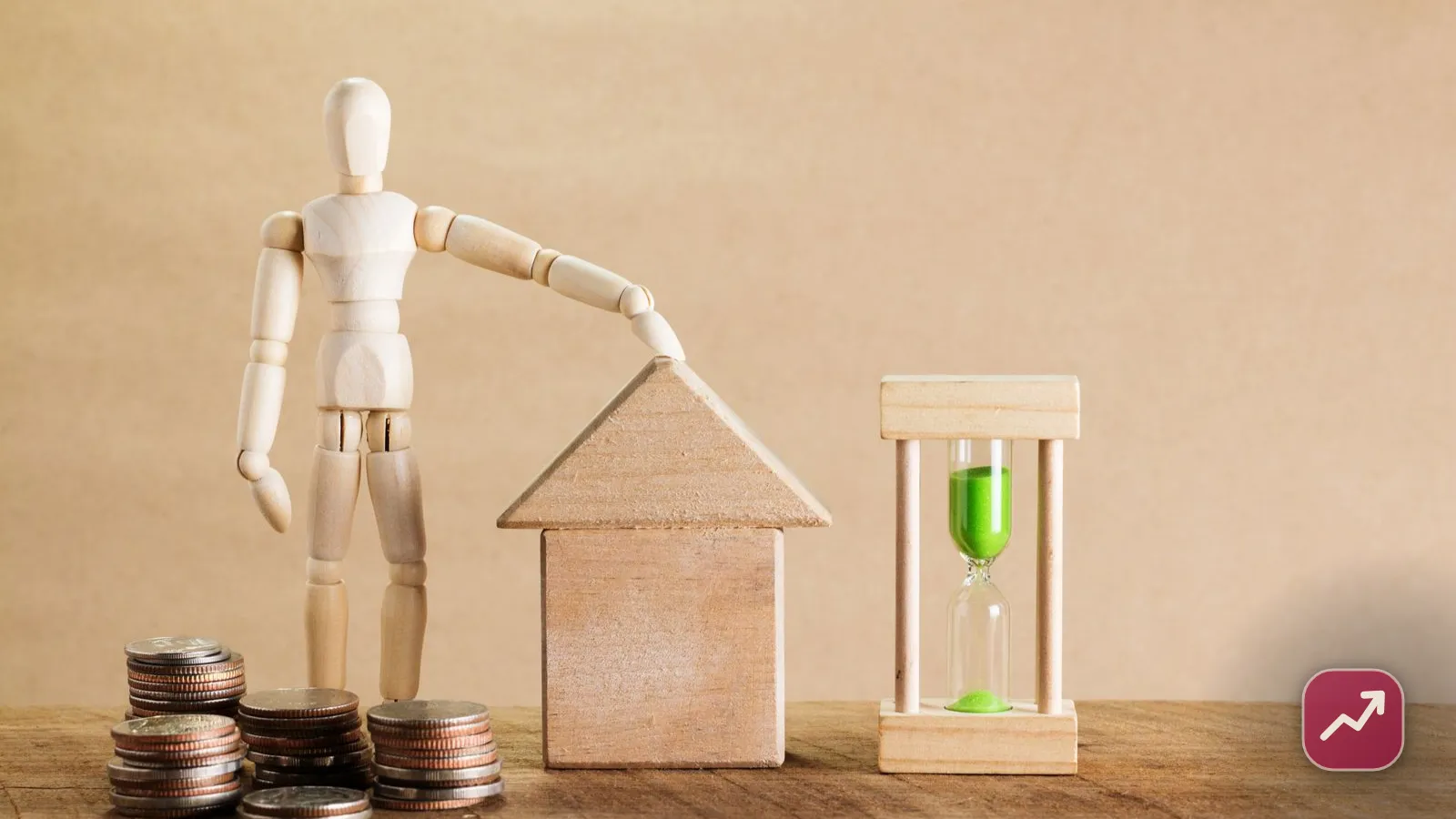
The short answer: set a target, automate the saving, keep it safe#
For most people, the down payment is the single biggest hurdle between renting and owning. The good news is that saving for it is a solvable problem, not a mystery: you need a target number, a timeline, and a boring, automatic habit of moving money every month into the right kind of account. Do those three things and the deposit builds itself.
The two questions that trip people up are *how much* to save and *where* to keep it — and both have clearer answers than the internet usually admits. You almost certainly need less than the mythical 20%, and the money should sit somewhere safe and boring, not in the stock market, if you plan to buy within a few years.
This guide covers how much you really need, the closing costs people forget, how to set your target and hit it faster, where to keep the fund, the first-time-buyer help that exists, and how to get mortgage-ready while you save. It also looks at Canada. As always, this is general education, not personalised advice; check the current rules and programs where you live.
- You rarely need 20% — but 20% down avoids extra insurance.
- Budget for closing costs too — 2-5% on top of the deposit.
- Keep it safe, not invested — a savings account, not stocks.
- Automate it — a standing transfer every payday does the work.
How much do you actually need?#
The famous rule is 20% down, and it has a real benefit: on a conventional US mortgage, putting 20% down lets you avoid private mortgage insurance (PMI), an extra monthly cost that protects the lender, not you. But 20% is a target, not a requirement. Conventional loans can go as low as 3%, FHA loans as low as 3.5% with a decent credit score, and VA and USDA loans can require nothing down at all for those who qualify.
In reality, most first-time buyers put down far less than 20%, closer to 9-10% by recent figures. A smaller down payment gets you into a home sooner but means a bigger loan, PMI and higher monthly payments; a bigger one costs more upfront but saves for decades. The overview of the down payment lays out the trade-offs. The right number is the one that fits your savings, your timeline and your monthly budget, not a rule of thumb applied on principle.
Don’t forget the closing costs#
The down payment is not the only cash you need on the day. Closing costs — lender fees, appraisal, title, taxes and more — typically add 2% to 5% of the loan amount on top of your deposit. On a $300,000 home that can be several thousand to over ten thousand dollars you must have ready, and it catches unprepared buyers off guard at the worst possible moment.
Build these into your target from the start, so your savings goal is the down payment plus closing costs, not just the headline percentage. Consumer resources at the Consumer Financial Protection Bureau break down exactly what these fees are and which are negotiable. Knowing the full "cash to close" number keeps the purchase from stalling right at the finish line.
Set your target number and timeline#
Turn the goal into a concrete number. Decide roughly what you can afford to buy, pick a down-payment percentage you’re comfortable with, add closing costs, and you have a target. Then divide by the number of months until you want to buy, and you have the monthly saving you need. Suddenly a vague dream becomes a specific line in your budget.
If that monthly number looks impossible, you have three honest levers: save longer, buy cheaper, or set aside more each month. Working out how much house is realistic first — using something like the 28/36 rule — keeps you from saving toward a price you could never actually get a mortgage for, which is a surprisingly common and demoralising mistake.
Where to keep your down-payment fund#
For a goal you’ll reach within a few years, safety beats growth. This is not money to put in stocks: a market drop the year before you buy could wipe out years of saving and delay the whole plan. Keep the fund somewhere it cannot fall in value and still earns a little — a high-yield savings account, a money-market account, or short-term CDs timed to your purchase.
A dedicated high-yield savings account, separate from your everyday money, does two jobs: it earns meaningfully more interest than a regular checking account, and keeping it out of sight makes it far less tempting to raid. Name the account "house" if your bank lets you — a labelled goal is saved toward far more consistently than an abstract number in a spreadsheet.
How to save it faster#
The fastest deposit comes from attacking the big three. Automate the saving so it happens before you can spend it. Cut your largest expenses rather than sweating the small ones, because housing, transport and food move the needle far more than daily coffee. And raise your income with a promotion, a side gig or overtime, funnelling the extra straight into the fund rather than into your lifestyle.
Windfalls are rocket fuel: tax refunds, bonuses and cash gifts should go entirely to the deposit while you’re in saving mode. And revisit your rent — sometimes a cheaper place, or a roommate for a year or two, is the single biggest lever, turning "someday" into a date on the calendar. None of it is glamorous, but all of it compounds toward the keys.
First-time buyer help and down-payment assistance#
Don’t assume you’re on your own. Across the US there are hundreds of down-payment assistance programs — grants, forgivable loans and low-interest second mortgages — run by states, cities and non-profits, many aimed at first-time buyers (often defined as not having owned a home in the last three years). They can cover part or even all of a down payment for those who qualify.
These programs are underused mainly because people don’t know they exist. Check your state’s housing finance agency and the home-buying resources at USA.gov, and ask any lender about first-time-buyer options before assuming you must save every last dollar yourself. A few hours of research here can genuinely shave years off your timeline.
Bigger down payment or buy sooner?#
There’s a real trade-off between saving more and buying now. A larger down payment means a smaller loan, no PMI at 20%, a lower monthly payment and less interest over the life of the loan. A smaller one gets you onto the property ladder sooner, which — if prices and rents keep rising — can be worth more than the PMI you’d pay in the meantime.
There is no universal answer; it depends on prices where you live, how far off 20% you are, and whether waiting just means paying more rent into someone else’s mortgage. Running the real numbers on how much house you can afford at each down-payment level, rather than chasing 20% on principle, is what turns this from a guess into a decision.
Get mortgage-ready while you save#
Saving the cash is only half the job; you also have to qualify for the loan. Use the saving period to strengthen your credit score, keep your debt-to-income ratio low, and avoid big new debts like a car loan right before applying. A stronger financial profile earns a lower interest rate, which can save you more over 30 years than the down payment itself.
When you’re close, get pre-approved so you know your real budget and can move fast on an offer. The wider first-home checklist — inspections, mortgage types, the buying process — is laid out in the first-time home buyer guide, and choosing between a fixed or adjustable-rate mortgage is the next decision once your deposit is finally ready.
For Canadians#
Canada sets minimum down payments in law: 5% on the portion of a home’s price up to $500,000, 10% on the portion between $500,000 and $1.5 million, and 20% above that. Anything under 20% requires mortgage default insurance (CMHC), an added cost rolled into the mortgage. So a Canadian buyer needs less upfront than the US 20% ideal, but pays insurance for the privilege of a smaller deposit.
Canada also offers two powerful savings tools. The First Home Savings Account (FHSA) combines tax-deductible contributions with tax-free withdrawals for a first home, and the Home Buyers’ Plan lets you borrow from your RRSP toward a purchase. Between them, a disciplined Canadian saver can build a deposit faster and more tax-efficiently than in almost any other country. The habits, though, are identical: set a target, automate, and keep it safe.
Mistakes to avoid#
None of these are exotic. They are the ordinary missteps that delay a purchase or blow up a budget, and every one of them is avoidable.
- Forgetting closing costs — the deposit is not the whole bill.
- Investing the fund in stocks — a crash can delay you by years.
- Chasing 20% on principle — sometimes buying sooner wins.
- Ignoring assistance programs — free help routinely goes unclaimed.
- Taking on new debt before applying — it can sink your approval.
- Not automating — willpower saves far slower than a standing transfer.
The bottom line#
Saving for a down payment is a matter of arithmetic and habit, not luck. Work out how much you truly need — usually less than 20%, plus closing costs — set a target and a timeline, keep the money somewhere safe, and automate a transfer every payday. Attack your biggest expenses, throw every windfall at the goal, and check the first-time-buyer help you may be owed.
Meanwhile, get mortgage-ready so you qualify for the best rate the day the deposit is done. In Canada the minimums and the savings accounts differ, but the plan is the same everywhere: a clear number, a safe home for the cash, and the patience to feed it every month. The keys to your first home are, in the end, mostly a savings problem you can actually solve.
Frequently asked questions
Frequently asked questions
Less than most people think. The famous 20% figure is a target, not a requirement: putting 20% down on a conventional US mortgage lets you avoid private mortgage insurance (PMI), but conventional loans can go as low as 3%, FHA loans as low as 3.5% with a decent credit score, and VA and USDA loans can require nothing down for those who qualify. In practice, recent figures put the typical first-time buyer closer to 9-10%. Remember to budget for closing costs too, typically another 2-5% of the loan, on top of the deposit. The right number is the one that fits your savings, timeline and monthly budget, not a rule of thumb.
Educational content — not personalised financial advice.
Read next
How to Rent an Apartment: Deposits, Leases and Your Rights
How to rent an apartment, explained simply: what you need to apply, how much deposit you pay and how to get it back, the lease and your rights as a tenant, rent increases and rent control, how to spot rental scams — and how the rules differ in Canada, Spain, France and Russia.
Mortgage Insurance and PMI: What It Is and How to Avoid It
Mortgage insurance and PMI explained: what private mortgage insurance is, why lenders require it below 20% down, what it costs, how to cancel it at 80% and 78% LTV, how FHA MIP differs, how to avoid PMI, and how mortgage insurance works in Canada and Europe.

How to Pay Off Your Mortgage Early and Save on Interest
How to pay off your mortgage early: why extra principal saves so much interest, biweekly payments, lump sums and recasting, whether to check for a prepayment penalty first, the pay-off-versus-invest decision, the mistakes to avoid, and how prepayment rules differ in Canada and beyond.