High-Yield Savings Accounts: Where Your Cash Should Actually Live
A savings account that pays 4 percent instead of almost nothing is the easiest money upgrade most people never make. Here is what a high-yield account is, when to use one, and when your money belongs somewhere else entirely.
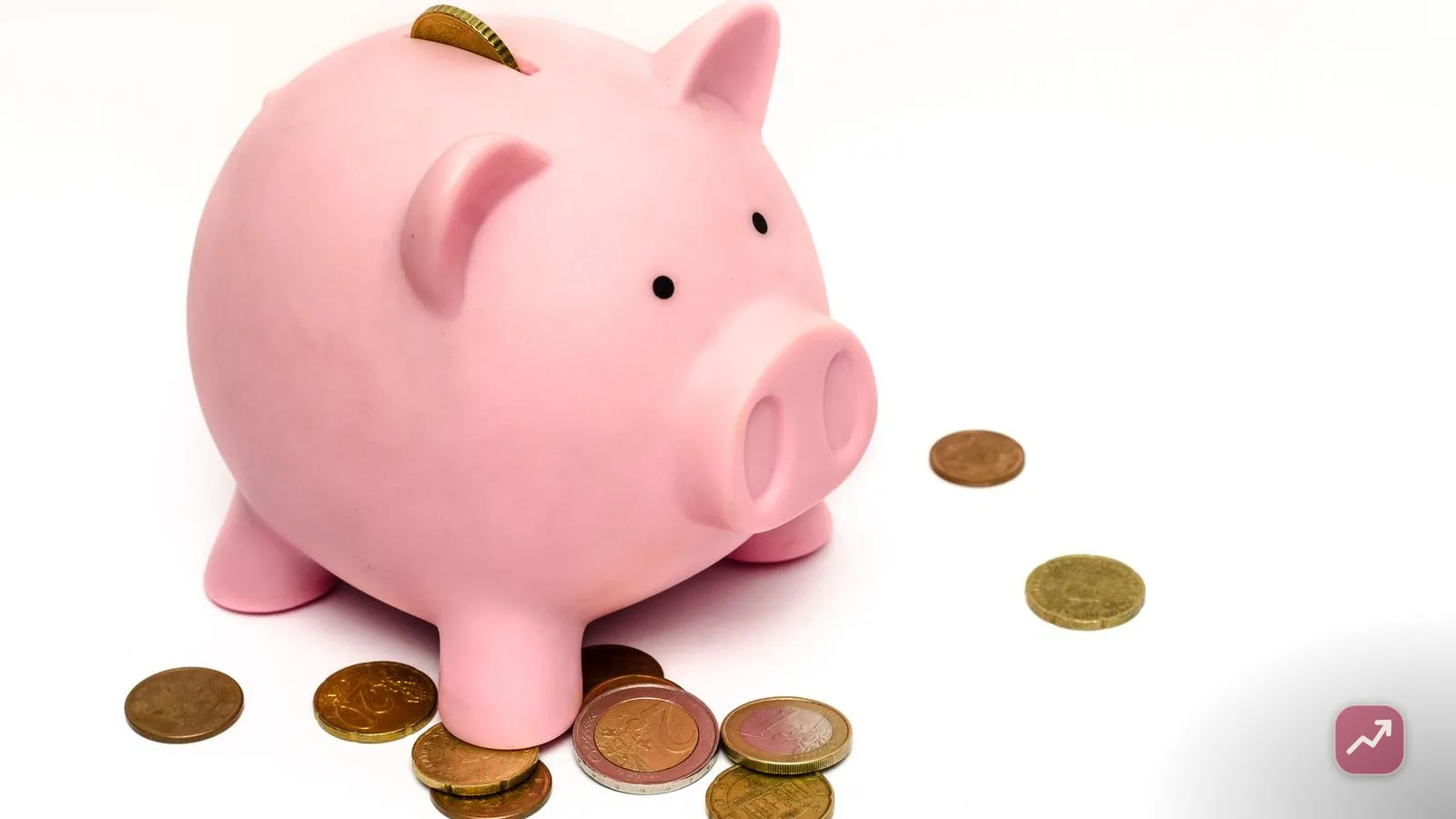
What is a high-yield savings account?#
A high-yield savings account is a savings account that pays far more interest than a standard one, while keeping the same safety and instant access. Where a big high-street bank might pay a token 0.4 percent, a high-yield account often pays several times that, and the difference is not small: on $10,000, the gap between 0.4 and 4 percent is $360 a year, for doing nothing but moving the money.
The higher interest rate is not a trick. Most high-yield accounts come from online-only banks and credit unions that skip the cost of branches and pass the savings on. Your money is just as protected, covered by the same government deposit insurance up to the legal limit, and you can usually withdraw it within a day or two, sometimes instantly.
So the pitch is simple: the same safety, the same access, materially more money. For any cash you are keeping in reserve rather than investing, a high-yield account is close to a free upgrade, and it is the single easiest win in personal finance.
How much more a high-yield account earns#
The value is easiest to see as a yearly figure. Here is roughly what a high-yield account paying 4 percent earns versus a typical 0.4 percent account, before tax:
Rates move with central-bank policy, so the exact numbers shift year to year. But the ratio is the point: a high-yield account routinely pays roughly ten times a standard one, and that multiple holds whether rates are high or low. Leaving a large balance in a near-zero account is a quiet, ongoing choice to give that money away.
- $1,000 balance: about $40 a year versus $4, ten times more.
- $5,000 balance: about $200 versus $20.
- $10,000 balance: about $400 versus $40.
- $25,000 balance: about $1,000 versus $100, a real sum for one transfer.
How is it different from a regular savings account?#
A high-yield account is not a different kind of product with new risks. It differs from the account most people already have in a few specific ways, and is worth separating from its neighbours:
The pattern is that a high-yield account changes the rate, not the risk. Everything that makes a savings account safe and simple still applies; you are just no longer accepting a near-zero return for it.
- Versus a standard savings account: the same thing, just a much higher rate, usually from an online bank, with no extra risk.
- Versus a checking or current account: a savings account is for holding money, not daily spending, and may limit how many withdrawals you make each month.
- Versus a certificate of deposit or term deposit: a CD locks your money for a fixed term for a slightly higher rate, while a high-yield account keeps it accessible.
- Versus investing: a savings account cannot lose value and will not grow much either, whereas investments can do both. This is the distinction that matters most.
When a high-yield savings account is the right home for your money#
A high-yield account is the correct place for money you need to be safe and reachable, not money you want to grow for decades. In practice, that means:
The common thread is a short time horizon and a need for certainty. For all of it, our saving guide covers how much to keep and how to build the habit; the account is simply where that money should sit while it waits.
- Your emergency fund: three to six months of essential spending that must be there the day a job or a boiler disappears.
- Short-term goals: a house deposit, a wedding, a car or a trip you will pay for within roughly one to three years.
- Sinking funds: money you set aside monthly for known future costs like insurance renewals, holidays or tax bills.
- Any cash you would panic to see fall in value, because in a high-yield account it never will.
When you should invest instead#
Here is the honest limit: a high-yield savings account is for safety, not for building wealth. Money you will not touch for five years or more usually belongs invested, not saved.
The reason is that a savings rate, however high, tends to only roughly match inflation over the long run, while a diversified basket of index funds has historically grown well ahead of it. Over a decade or two that difference compounds into a different life. Cash is the right tool for the next few years and the wrong tool for the next few decades.
Put crudely: use a high-yield account to protect money and investments to grow it. Trying to grow wealth in cash is as slow as trying to keep next month's rent in the stock market is reckless.
Does a high-yield savings account beat inflation?#
Usually it roughly keeps pace, and sometimes it quietly falls behind. When central banks raise rates to fight inflation, top high-yield accounts often pay close to the inflation rate, so your money holds most of its value. In calmer times they may pay a little less than prices rise.
That is fine, because beating inflation is not a savings account's job. Its job is to lose as little real value as possible while staying safe and liquid, which is exactly what you want for an emergency fund. For the money that actually needs to outgrow inflation, see our piece on protecting your money from inflation; a high-yield account is the floor, not the engine.
Is a high-yield savings account worth it right now?#
Whether it is 'worth it' barely depends on the moment. When central-bank rates are high, high-yield accounts pay a lot and the gap over a normal account is glaring; when rates fall, they pay less, but so does everything else, and the multiple over a standard account stays roughly the same. There is no bad time to stop earning almost nothing on your cash.
What does change with the cycle is where the extra money is best aimed. In a high-rate period, a high-yield account can briefly rival what safe bonds pay, making it a genuinely attractive home for short-term money; in a low-rate period, it still beats a normal account, but the case for investing anything long-term only gets stronger. Either way the account earns its keep: you are simply choosing the least-bad place for cash you are not ready to invest.
How to choose a high-yield savings account#
The accounts are broadly similar, so a short checklist settles it:
Get those right and the specific provider matters little. The rate you are offered will drift over time, so it is worth a two-minute check once a year to make sure yours is still competitive.
- Deposit insurance: confirm the bank is covered by your government's guarantee (the FDIC in the US, the FSCS in the UK, national schemes across the EU). This is non-negotiable, and it is why the rate is not a risk.
- The rate, with a healthy suspicion of teaser rates: an eye-catching intro rate that drops after a few months is worth less than a slightly lower rate that lasts.
- No fees and no gimmicks: monthly fees or balance requirements quietly erase the extra interest.
- Easy transfers: you want your money one quick transfer from your main account, especially for an emergency fund.
- A reputable, well-known bank: an unfamiliar name paying far above everyone else is a reason to look closer, not to rush in.
The traps: teaser rates, taxes and 'high-yield' that isn't#
A few things quietly eat the advantage, and they are easy to avoid once you know them.
The first is the teaser rate: a headline number that applies for three or six months, then collapses. Read what the rate becomes after the intro period, because that is what you will actually earn. The second is rate-chasing: hopping between banks for a fraction of a percent usually costs more in hassle than it earns, so switch for a meaningful gap, not a tiny one.
The third is tax. Interest is normally taxable income, so a headline 4 percent is a little less in your pocket; worth knowing, not worth avoiding. And the last is the label itself: 'high-yield' is a marketing phrase, not a guarantee. Some accounts wear it while paying barely more than a standard one, so always compare the actual rate, not the adjective.
The same idea outside the United States#
The account has different names around the world, but the concept is universal: a safe, accessible place for cash that pays a real rate. What changes is the label and the guarantee limit.
In the UK it is an easy-access or notice savings account; in Spain, a cuenta remunerada; in France, a livret or a super livret; across much of the world, a high-interest savings or term-deposit account. The government guarantee differs too, around $250,000 per bank in the US, 100,000 euros across the EU, 85,000 pounds in the UK, so if you hold more than the limit, spreading it across banks keeps all of it protected. You can check how deposit guarantees work through your national scheme, and the concept of deposit insurance is the same everywhere.
Wherever you live, the move is identical: find the safest account paying a genuinely competitive rate, keep your short-term and emergency cash there, and send the money you will not need for years off to be invested instead.
Frequently asked questions
Frequently asked questions
A savings account that pays much more interest than a standard one, often around ten times the big-bank rate, while keeping the same safety and easy access. Most come from online banks with lower costs. Your money stays covered by government deposit insurance up to the legal limit.
Educational content — not personalised financial advice.
Read next

How to Transfer Money: Bank Transfers and Instant Payments
How to transfer money, explained simply: bank transfers (ACH) vs wires vs instant payments like Zelle and FedNow, how fast and how much each costs, what details you need, why most transfers are irreversible, how to avoid scams — and how Canada, Spain, France and Russia differ.
How Interest Rates Work — and What They Mean for Your Money
How interest rates work, explained simply: what a rate is, who sets it (the Federal Reserve), how a rate change reaches your mortgage, loans, credit cards and savings, why mortgage rates do not follow the Fed, and what to do when rates move — with how Canada, Europe and Russia differ.

How to Switch Bank Accounts Without the Headaches
How to switch bank accounts in the US: why there is no automatic switching service, the safe order of operations (open new, move direct deposit, redirect automatic payments, overlap, then close), how long it takes, what can go wrong, and why France and Spain make switching far easier.