How Interest Rates Work — and What They Mean for Your Money
One number quietly decides what your mortgage costs, what your savings earn and how much a credit-card balance hurts: the interest rate. When central banks move it, the change ripples out to almost every loan and account you own — but not all at the same speed, and not in the direction you might expect. This guide explains how interest rates work in plain terms: what a rate really is, who sets it, how a decision at the Federal Reserve reaches your wallet, why mortgage rates follow their own logic, and what to actually do when rates rise or fall.
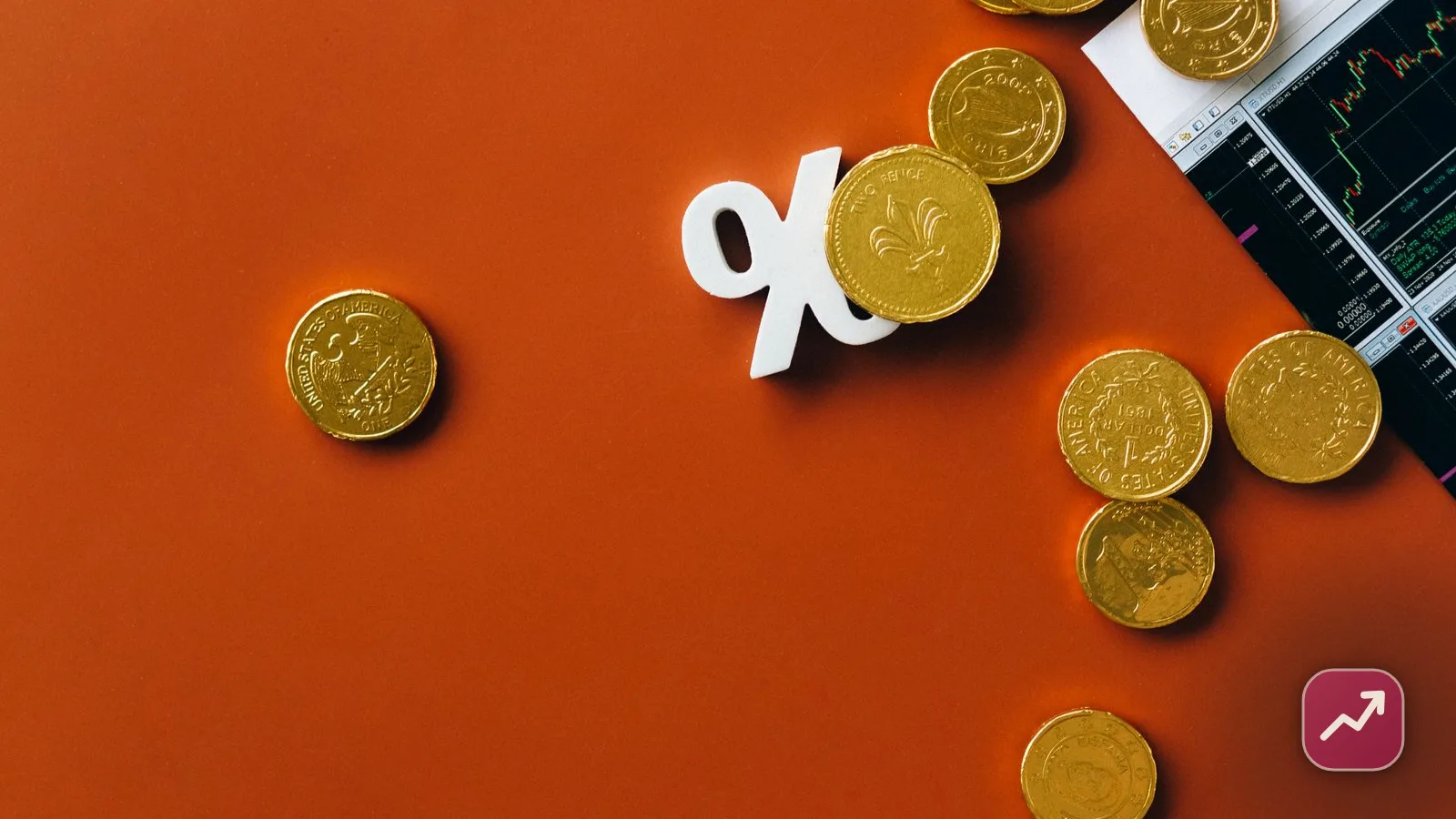
How interest rates work: the price of money#
Every loan, every mortgage, every savings account and every credit-card balance turns on a single number that decides what it costs you or earns you: the interest rate. When that number moves, the effect ripples through your whole financial life — your monthly payment, the return on your cash, the cost of carrying a balance. Yet most people never learn how interest rates are actually set, or why they climb and fall.
This guide explains how interest rates work in plain terms: what a rate really is, who decides it, how a change at the central bank reaches your wallet, and what to do when rates move. It focuses on the United States, with a look at how Canada, Europe and Russia differ, because the mechanics are similar everywhere but the details are not. It is general education, not financial advice.
- An interest rate is the price of money — what you pay to borrow, or earn to save.
- Central banks set a key rate, and almost every other rate is built on top of it.
- Higher rates hurt borrowers and reward savers — and the reverse when they fall.
- Not every rate moves together — mortgages, in particular, follow their own logic.
What an interest rate really is#
At its simplest, an interest rate is the price of using someone else’s money, expressed as a percentage per year. Borrow $10,000 at 6% and you pay roughly $600 a year for the privilege; put $10,000 in an account paying 4% and you earn about $400. A plain overview of the interest rate shows it is one of the oldest ideas in finance — older than paper money itself.
A rate has two sides that are easy to confuse. When you borrow, it is a cost; when you save or invest, it is a reward. The same force that makes an unpaid credit-card balance swell also makes a savings balance grow — the only difference is which side of the loan you are on. That is why understanding rates is really the same skill as understanding how compound interest builds wealth, for you or against you.
Who sets interest rates: the Federal Reserve#
You constantly hear that “the Fed raised rates” or “cut rates,” and it pays to know what that means. The Federal Reserve — the US central bank — sets a target for the federal funds rate, the rate at which banks lend to each other overnight. The Fed does not directly set your mortgage or savings rate, but this one benchmark is the anchor everything else is priced from. The Federal Reserve publishes its decision after each policy meeting.
As of mid-2026, after a run of cuts from a 2023 peak of 5.25%–5.50%, the target range sits at 3.50%–3.75%, and the Fed has been holding it there while it watches inflation. When the Fed changes this interest rate, it is steering the economy: raising rates to cool inflation by making borrowing dearer, or lowering them to encourage spending when growth slows. Every other rate you meet is, in effect, this one plus a margin for risk and profit.
How a rate change reaches your wallet#
The link from a Fed decision to your finances runs first through the prime rate, the rate banks charge their most creditworthy customers, which sits a fixed margin — about three percentage points — above the federal funds rate. Move the fed funds rate and prime moves the same day, in lockstep.
From there it spreads. Credit-card APRs are usually quoted as prime plus a margin, so a hike shows up on your statement within a billing cycle or two — which is exactly why understanding how credit cards work matters most when rates are high. Home-equity lines, variable personal and business loans, and adjustable-rate mortgages all track prime too. Savings rates move the same way, though banks are usually quicker to raise what they charge than what they pay.
Why mortgage rates don’t follow the Fed#
Here is the counterintuitive part that trips up even careful borrowers: the 30-year fixed mortgage rate does not track the fed funds rate. It follows the yield on the 10-year Treasury and the mortgage-bond market, which price in investors’ expectations of inflation and growth years into the future — not the Fed’s overnight rate today.
That is why you can see mortgage rates rise on a day the Fed cuts, or fall before the Fed acts at all: the market has already moved on expectations. For a home buyer it means you cannot simply wait for the next Fed cut to get a cheaper loan. What matters is the longer-term outlook, which is one reason the choice between a fixed or adjustable-rate mortgage deserves real thought rather than a default pick.
Fixed vs variable: who feels a change first#
Whether a rate change touches you tomorrow or never comes down to one thing: whether your rate is fixed or variable. A fixed rate is locked for the life of the loan, so an existing 30-year mortgage at 3% is completely unaffected when new rates climb to 7% — the pain falls only on new borrowers. A variable rate resets periodically against a benchmark, so the change reaches you at the next adjustment.
This single distinction explains most of what people feel when rates move. Credit cards and home-equity lines are variable, so they bite fast. A fixed mortgage is a fortress. When you save, it flips: a variable savings account rewards you quickly when rates rise, while money locked in a fixed-term certificate keeps its old rate — a gift if you locked in high, a frustration if you locked in low.
What higher rates mean if you borrow#
When interest rates rise, borrowing gets more expensive across the board, and the effect is largest on big, long or variable debts. A higher mortgage rate can add hundreds to a monthly payment; a car loan costs more each month; a credit-card balance that was merely expensive becomes punishing. The sensible response is to attack variable-rate debt first, because it is the debt whose cost can climb on its own while you sleep.
Rising rates also quietly reshape big decisions. They shrink how much home you can buy, because more of every payment goes to interest rather than principal — which is why how much house you can afford is as much a question about rates as about price. And they are a reason to pause before taking on new variable debt, since tomorrow’s payment on it may be higher than today’s.
What higher rates mean if you save#
There is a genuine silver lining, and savers spent years being denied it. When rates rise, the return on cash finally climbs: a high-yield savings account, a money-market account or a certificate of deposit starts paying real money instead of a rounding error. In a high-rate stretch, idle cash sitting in an old account paying almost nothing is a real, avoidable loss of purchasing power.
The catch is that banks raise deposit rates slowly and unevenly, so the headline rate rarely lands in your account by default — you have to move your money to claim it. Non-commercial resources such as the CFPB explain how to compare accounts and read the fine print. The rule of thumb is simple: when rates are high, shop your savings aggressively; when they start falling, lock in good rates while you still can.
Interest rates, inflation and your real return#
Central banks do not move rates on a whim; they move them mainly to control inflation. When prices rise too fast, raising interest rates cools spending and borrowing until demand — and price growth — eases. When the economy stalls, cutting rates cheapens money to revive it. That single lever sits behind nearly every rate headline you read.
For your own money, what counts is the real rate — the interest you earn minus inflation. A savings account paying 4% while inflation runs at 5% is quietly costing you purchasing power, even as the balance grows. That gap is exactly why it pays to protect your money from inflation, and why a rising headline rate is not automatically good news for a saver until you subtract what prices are doing.
How interest rates work around the world#
The mechanics are universal, but the reference points differ. In Canada, the Bank of Canada sets the policy rate and prime follows, but mortgages typically renew every five years — so a rate rise hits households in waves as their terms come up, the so-called renewal shock, rather than all at once. In the euro area, covering Spain and France, the European Central Bank sets the rates, and the 12-month Euríbor is the benchmark most mortgages are priced from.
The national flavour still matters enormously. Spanish mortgages are traditionally variable and tied to Euríbor, so households feel every ECB move within a year; French mortgages are overwhelmingly fixed, so existing borrowers are insulated and only new buyers feel a change. In Russia, the Bank of Russia’s key rate was pushed to strikingly high levels — a peak of 21% in late 2024 — to fight inflation and defend the ruble, and even after a round of cuts it stays far above anything in the West, dragging both loan and deposit rates with it. Same tool, very different setting.
What to do when interest rates move#
You cannot control interest rates, but you can position for them. When rates are high, the playbook is clear: attack variable-rate debt first, move idle cash into a high-yield account or certificate to capture the return, and be wary of locking into a huge fixed loan at what looks like a peak. When rates fall, the moves reverse: it becomes worth checking whether to refinance your mortgage or other fixed debt, and worth locking savings rates in before they drop.
The deeper point is to stop treating rates as background noise. A single percentage point on a large mortgage is real money every month for decades. Knowing whether your debts and savings are fixed or variable, and which way rates are heading, turns a confusing headline into a concrete checklist. Review your borrowing and saving whenever the central bank moves — not once a year out of habit.
The bottom line#
Interest rates are simply the price of money, set in motion by a central bank and passed down, rate by rate, to your mortgage, your loans, your credit card and your savings. Higher rates punish borrowers and reward savers; lower rates do the opposite. Not everything moves together — fixed loans are shielded, variable ones are exposed, and long-term mortgage rates answer to the bond market rather than the central bank.
You do not need to forecast rates to benefit from understanding them. Know which of your rates are fixed and which are variable, keep your savings where they earn the going rate, kill variable debt when rates climb, and refinance or lock in when they fall. Do that and the number that quietly governs your financial life stops being a mystery — and starts working, at least a little, in your favour.
Frequently asked questions
Frequently asked questions
An interest rate is the price of money, expressed as a percentage per year. When you borrow, it is what you pay a lender for the use of their money; when you save or invest, it is what a bank or borrower pays you for the use of yours. If you borrow $1,000 at an interest rate of 5% per year, you owe about $50 in interest over a year on top of repaying the $1,000; if you deposit $1,000 in an account paying 5%, you earn about $50. That is the whole idea at its core: rent on money. A few refinements make it more precise in practice. First, most real rates compound, meaning you earn or pay interest on the interest that has already accrued, which is why a balance left untouched grows faster over time — the same mathematics that builds savings can also make debt balloon. Second, the rate you are quoted is usually annual, but interest is often calculated and applied more frequently (monthly on a credit card, daily on some accounts), so the effective amount can be slightly higher than the simple headline suggests. Third, rates always reflect risk and time: a lender charges more to a riskier borrower or for a longer loan, and pays a saver less when money is easy to come by. The practical takeaway is that whenever you see a percentage attached to a loan, a card, a mortgage or a savings account, you are looking at the price of money for that specific deal — and comparing those percentages, rather than the monthly payment alone, is how you tell a good deal from an expensive one.
Educational content — not personalised financial advice.
Read next

How to Transfer Money: Bank Transfers and Instant Payments
How to transfer money, explained simply: bank transfers (ACH) vs wires vs instant payments like Zelle and FedNow, how fast and how much each costs, what details you need, why most transfers are irreversible, how to avoid scams — and how Canada, Spain, France and Russia differ.

How to Switch Bank Accounts Without the Headaches
How to switch bank accounts in the US: why there is no automatic switching service, the safe order of operations (open new, move direct deposit, redirect automatic payments, overlap, then close), how long it takes, what can go wrong, and why France and Spain make switching far easier.

How Overdraft Fees Work and How to Avoid Them
How overdraft fees work and how to avoid them: what an overdraft is, why a $35 fee can dwarf the sum you overspent, the difference between overdraft and NSF fees, the opt-in rule, what happened to the CFPB overdraft cap, cheaper alternatives when money is short, and how the rules differ in Canada.