How Sales Tax Works in the US (and Why It Is Not a VAT)
The price on the shelf is almost never the price you pay at the register, and that small gap is one of the most misunderstood parts of everyday American money. Sales tax in the United States is a patchwork of state and local rules with no national rate, which is very different from the value-added tax used almost everywhere else. Here is how sales tax actually works, what is taxed, why online orders now charge it, and how Canada handles the same idea.
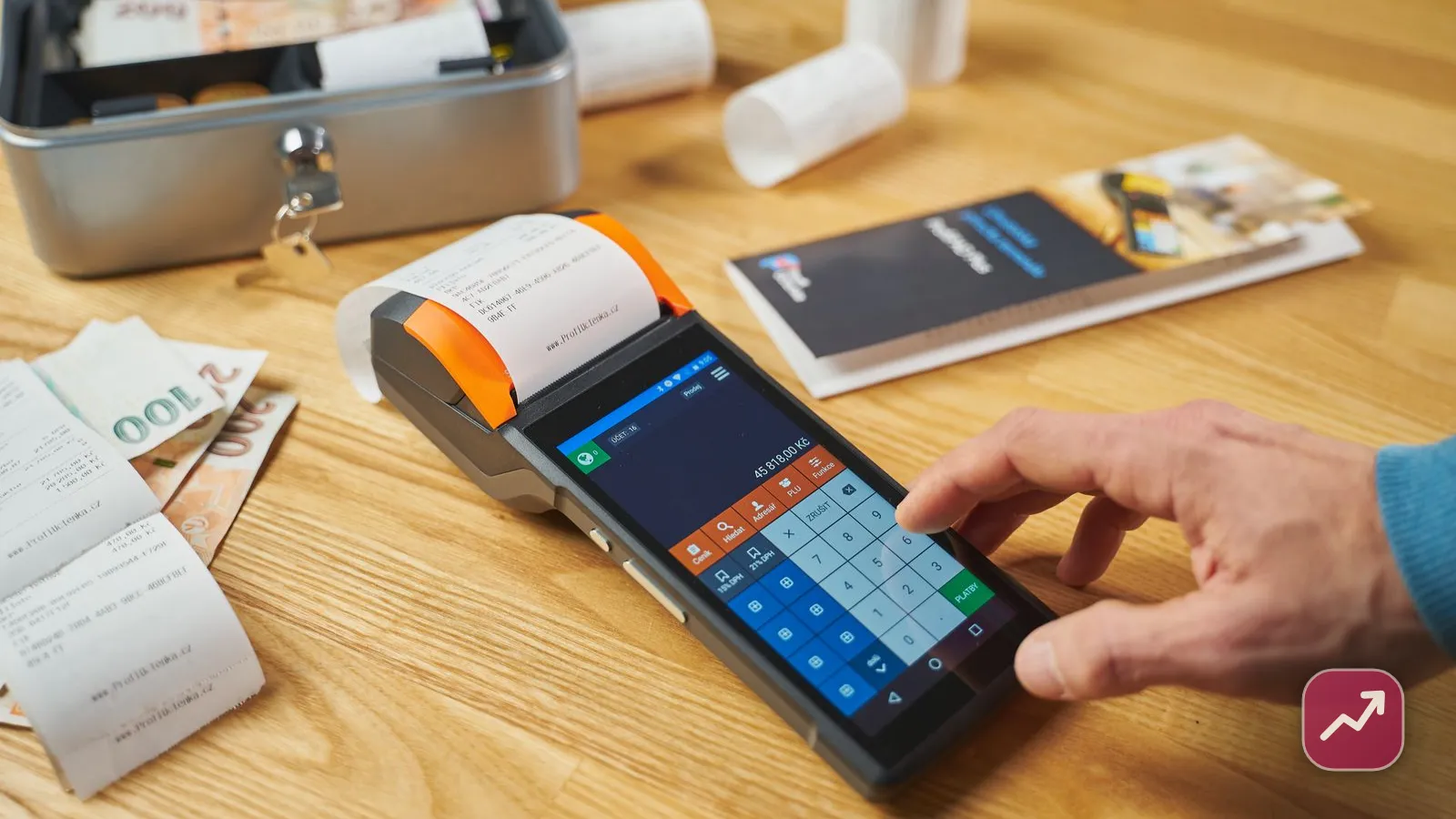
How sales tax works in the US (and why it is not a VAT)#
You grab something priced at $10, hand over a ten, and the cashier asks for more. That small surprise at the register is sales tax, and it is one of the quietly confusing corners of American money. The sticker says one number, your receipt says another, and the difference lands entirely on you at the moment you pay.
Almost everywhere else in the world, the tax on what you buy is baked into the price you see, through a system called value-added tax. The United States does the opposite: it has no national sales tax at all, and instead lets each state and even each city set and add its own. This guide walks through how sales tax really works, what gets taxed and what does not, why your online orders now charge it, and how Canada handles the same job in its own way. It is general education, not tax advice, and the rules differ sharply from one place to the next.
- Sales tax is added at the register, not included in the shelf price.
- There is no national rate — states and localities each set their own.
- Five states have no statewide sales tax, while some cities top 10%.
- Online orders now charge it in most places after a 2018 court ruling.
What sales tax actually is#
A sales tax is a tax on retail sales of goods and, in many places, some services, charged as a percentage of the price and collected by the seller at the point of sale. The store adds it to your total, holds it briefly, and passes it on to the government. As the overview of sales taxes in the United States describes, it is meant to fall on the final consumer, which is why businesses buying goods to resell generally do not pay it.
The defining feature in America is that there is no federal sales tax. Every bit of it is set below the national level, so the rate you pay depends on the state you are in and often the county and city on top of that. This is why the same product can cost a different total in two towns an hour apart, and why a price tag alone can never tell you what you will actually hand over.
Why the shelf price is not the price you pay#
In most of the world, the tax on a purchase is already inside the number on the label, so the price you see is the price you pay. In the United States, sales tax is added on afterward, at the register, which is why a $20 item might ring up as $21.50 or more depending on where you are standing.
There is a logic to it, even if it trips up visitors. Because rates vary so much between states and cities, a national retailer cannot print one tax-inclusive price on packaging sold everywhere, so the base price is shown and the local tax is calculated at checkout. The practical effect is that you should mentally add several percent to any advertised price, and never assume the shelf number is the final one.
A patchwork of state and local rates#
Sales tax in America is layered. A state sets a base rate, then counties, cities and special districts can add their own on top, so the combined rate you actually pay is the sum of all of them. Most combined rates land somewhere between about 4% and 10%, but in some localities they climb past 10%. Each state runs its own tax authority that publishes current rates, such as Washington’s department of revenue, while the authoritative national rate tables from the Tax Foundation show just how widely they vary.
Five states charge no statewide sales tax at all, easily remembered by the nickname NOMAD: New Hampshire, Oregon, Montana, Alaska and Delaware. Even there, the picture is not always simple, since Alaska lets its local governments levy their own sales taxes. For everyone else, where you live, and even where you shop, quietly changes how much tax you pay on the same purchase.
What is taxed and what is exempt#
Sales tax generally applies to tangible goods, but the details are full of exceptions that reflect local politics. Many states exempt groceries and prescription medicines to soften the burden on essentials, while taxing prepared food, electronics and clothing, though even clothing is exempt in a few states. Services were historically untaxed but a growing number of states now tax at least some of them.
There is also a lesser-known companion called use tax. If you buy something from out of state and no sales tax is collected, you technically owe an equivalent use tax to your own state, a rule that mostly bites on big untaxed purchases. For everyday shopping, what matters is knowing that essentials are often lighter or tax-free, which is worth factoring into a household budget.
Online shopping and sales tax#
For years, buying online from a seller in another state often meant no sales tax at checkout, a gap that saved shoppers money and frustrated brick-and-mortar stores. That changed with the 2018 Supreme Court decision in South Dakota v. Wayfair, which let states require out-of-state sellers to collect sales tax once they pass a threshold of sales into the state, a concept known as economic nexus.
The result is that most online orders now include sales tax based on your delivery address, just like an in-store purchase. Marketplaces typically calculate and collect it automatically, so the era of tax-free internet shopping is largely over. If an online price looks lower than in a shop, remember the tax will usually be added before you check out, closing much of the gap.
How Canada handles it: GST, PST and HST#
Canada shows a middle path between the American patchwork and a pure national tax. At the federal level it charges a 5% Goods and Services Tax, a true value-added tax, and provinces add their own on top. In several provinces the two are merged into a single Harmonized Sales Tax, collected as one combined rate.
Rates depend on the province: Ontario applies a 13% HST, New Brunswick, Newfoundland and Prince Edward Island sit at 15%, Nova Scotia trimmed its rate to 14% in 2025, and Alberta together with the territories charge only the 5% federal GST with no provincial sales tax. Canada also softens the impact on lower-income households with a quarterly GST/HST credit. Unlike US sales tax, the Canadian GST/HST works like the value-added taxes used across Europe, collected in stages along the supply chain.
Why the US is the odd one out#
Step back and the American approach looks unusual. Almost every other developed country funds a big share of its government through a national value-added tax, or VAT, built into prices and collected at each stage of production. The United States is one of the only major economies with no VAT and no national sales tax whatsoever, relying instead on that state-and-local patchwork.
The difference matters beyond trivia. A VAT is collected in slices along the supply chain and shown inside the price, while American sales tax is collected once, at the final sale, and added on top. Knowing which system you are dealing with explains why prices feel "honest" abroad and why your US receipt always seems to grow at the last second.
Sales tax, inflation and your budget#
Because sales tax is a percentage of what you spend, it quietly rises with prices. When the cost of goods climbs, the tax on them climbs too, so inflation lifts your tax bill even when the rate never changes, one more reason to protect your money from inflation. A few percent on every purchase adds up to real money over a year.
Building the tax into your expectations keeps it from derailing a plan. If you budget for a $1,000 purchase, quietly pencil in the local rate so the true cost is not a shock at the counter. Treating sales tax as part of the price rather than an afterthought makes a household budget more accurate and less prone to nasty surprises.
Sales tax if you sell or freelance#
The moment you sell goods, sales tax becomes your responsibility rather than just a line on your receipt. Sellers generally must register with the state, collect the right rate from customers, and send it in on a schedule, and thanks to economic nexus that duty can reach across state lines once your sales into a state pass its threshold. It is a common surprise for people turning a side project into a small business.
Getting it right matters, because collected tax is not your money, it is the state’s, held in trust until you remit it. Anyone moving from employment toward working for themselves should fold sales-tax rules into the wider picture covered in our self-employed money guide, alongside income tax and record-keeping, so a growing venture does not stumble on a tax it forgot to charge.
Sales tax versus income tax#
Sales tax and income tax pull from opposite ends of your money. Income tax, with its tax brackets, takes a slice of what you earn, while sales tax takes a slice of what you spend. States with no income tax often lean harder on sales tax to fund themselves, so a "tax-free" reputation can hide a higher cost at the checkout.
One important quirk is that sales tax is considered regressive, meaning it takes a larger share of income from people who earn less, since they spend more of what they make. That is why essentials are often exempted. Understanding both taxes together, the one on your paycheck shown in gross versus net pay and the one on your spending, gives a fuller picture of what government actually costs you.
How to keep sales tax from surprising you#
A little awareness goes a long way. Learn your own combined local rate, since it is the one you meet most often, and round any big purchase up by that amount when you plan so the register never catches you short. On major buys like appliances or furniture, a few percent is enough to be worth including from the start.
It also pays to know the exemptions where you live, because groceries and medicine may be lighter or tax-free while other categories are not. When you shop across a state or city line, a different rate may apply, so the same cart can cost a little more or less a short drive away. None of this is dramatic, but folding it into how you think about prices keeps your spending honest with itself.
The bottom line on sales tax#
American sales tax is best understood as a local tax hiding behind a national habit: prices shown without it, then topped up at the till by whatever your state and city charge. There is no single rate to memorise, only the one where you are standing, plus the knowledge that essentials are often spared and online orders usually are not.
See it clearly and it stops being a surprise. Add your local rate to big purchases, know your exemptions, and remember that the rest of the world bakes this tax into the price through a VAT instead. Sales tax will never be exciting, but understanding it means the number on your receipt finally makes sense.
Frequently asked questions
Frequently asked questions
Sales tax is a tax on the retail sale of goods, and in many places some services, charged as a percentage of the price and collected by the seller when you pay. The store adds the tax to your total at the register, holds the money briefly, and then sends it to the government, so the tax is designed to fall on you as the final consumer rather than on the business. In the United States the defining feature is that there is no national sales tax at all. Instead, each state sets its own rate, and counties, cities and special districts can add their own on top, so the combined rate you actually pay is the sum of all those layers and depends on exactly where the sale happens. That is why the same item can cost a different total in two nearby towns, and why the price on the shelf is almost never the price you pay: the tax is added afterward, at checkout, rather than being included in the displayed price the way a value-added tax is in most other countries. Most combined rates fall somewhere between about 4% and 10%, though some localities go higher. Businesses that buy goods to resell generally do not pay sales tax on those purchases, using a resale certificate, because the tax is meant to apply only once, at the final retail sale to the consumer.
Educational content — not personalised financial advice.
Read next

Moving Abroad: What Happens to Your Taxes, Accounts and Pension
What happens to your money when you move abroad: how tax residence actually works, why US citizens keep filing wherever they live, the exclusion and the credit that prevent double taxation, states that keep taxing former residents, FBAR and Form 8938 reporting, what happens to a 401k or IRA, pensions and health cover across borders, and how leaving works in Canada, Spain, France and Russia.

What to Do If You Can’t Pay Your Taxes: Payment Plans, Penalties and Relief
What to do if you cannot pay your taxes: why filing on time matters more than paying on time, what penalties and interest actually cost, how to set up an IRS payment plan, what happens when the debt is genuinely unpayable, what the tax authority can do without a court order, how to avoid tax-relief scams, and how the same problem is handled in Canada, Spain, France and Russia.

Tax-Deductible Donations: How to Give to Charity Tax-Efficiently
How tax-deductible donations really work: why you usually have to itemize, the new 2026 deduction for non-itemizers, AGI limits, donating appreciated stock to skip capital gains, donor-advised funds, Qualified Charitable Distributions for retirees, and how giving is taxed in Canada and Europe.